


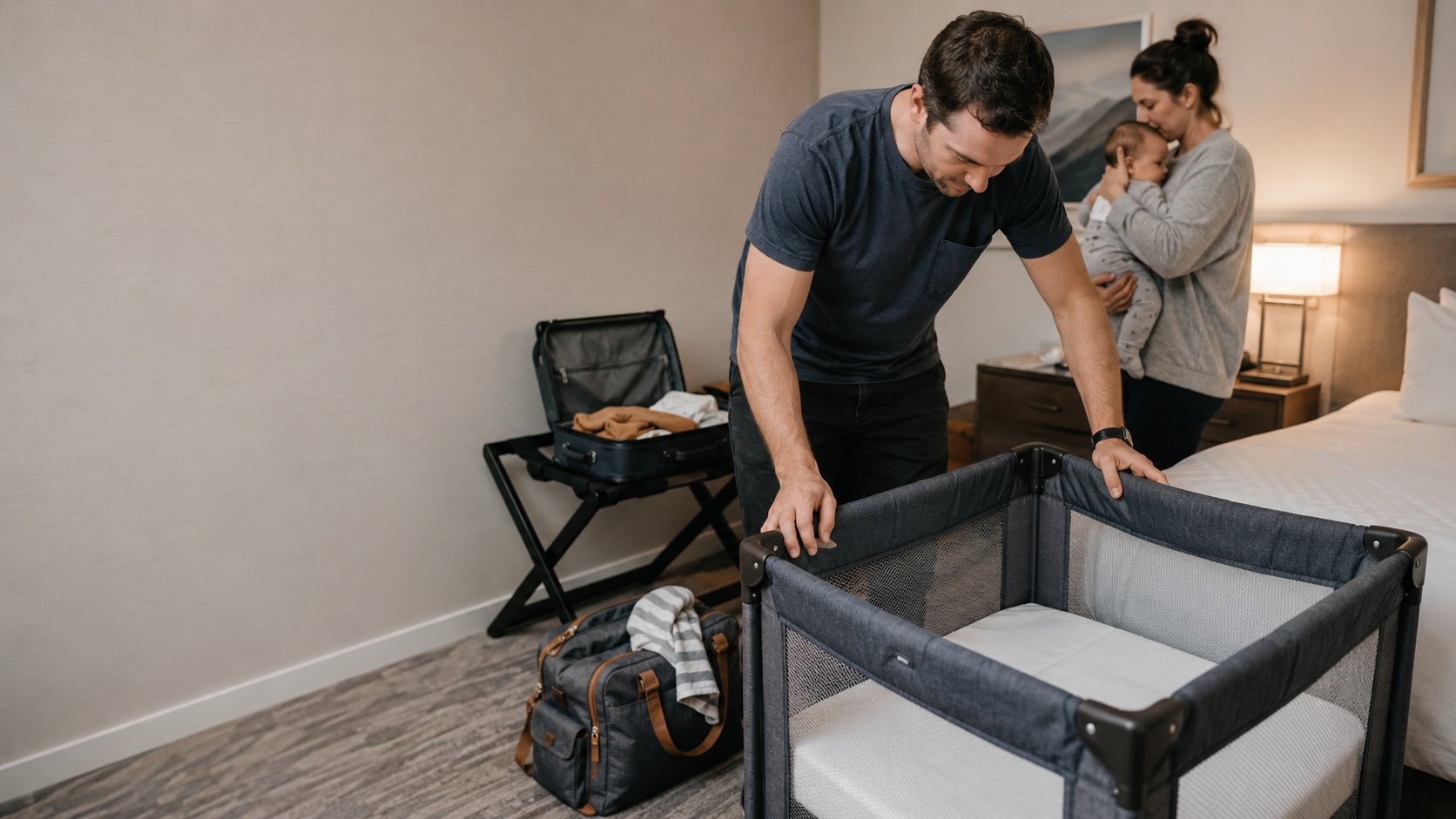
A hotel room finally goes quiet.
Suitcases are open, diapers are unpacked, and a tired baby is rubbing their eyes after a long flight. Then the hotel staff rolls in the crib or what’s supposed to be one.
Maybe the sheet is missing. Maybe the frame feels unstable. Sometimes it’s an older travel cot that raises more questions than comfort.
That’s when many parents suddenly ask: Are hotel cribs actually safe?
For many families, concerns about hotel crib safety don't start until they're standing directly in front of one. At home, sleep routines feel predictable. While traveling, parents often have to trust equipment they didn't choose, inspect, or assemble themselves.
Most hotels do their best to accommodate families, but standards vary. One property may provide a modern, well-maintained crib. Another may offer a worn playard that’s seen years of use.
That's why understanding what to look for matters more than simply asking whether a hotel offers a crib.
-
Not every hotel crib is automatically safe or well-maintained.
-
Federal crib regulations exist, but hotel sleep equipment can vary significantly.
-
A quick inspection before bedtime can help identify common risks.
-
Renting a certified sleep solution often provides more consistency when traveling with infants.
Why Hotel Cribs Create So Much Uncertainty
Parents rarely question their own crib at home.
They know where it came from. They know how it was assembled. They've watched their baby sleep in it hundreds of times.
Hotel equipment is different.
A crib may have been assembled and disassembled repeatedly. It may have been moved between rooms dozens of times each month. Staff turnover, storage limitations, and inconsistent maintenance can all affect condition over time.
That doesn't mean hotel cribs are unsafe by default.
It means they're largely unknown.
And unknown sleep environments tend to create anxiety because safe infant sleep depends on details that aren't always obvious from a quick glance.
Consumer Reports notes that while hotels providing cribs must comply with federal crib standards, hotels are not required to provide cribs at all, and playards or travel sleep products may not always be subject to the same requirements.
What Standards Must Hotel Cribs Meet?
When discussing hotel crib safety standards, it helps to understand the difference between what regulations require and what actually appears inside a guest room.
In the United States, full-size cribs used in hotels are required to comply with federal safety regulations overseen by the Consumer Product Safety Commission (CPSC). These rules were strengthened after years of injury reports involving defective cribs.
A compliant crib should generally include:
-
Fixed sides rather than drop-side designs
-
Proper slat spacing
-
Secure hardware and fasteners
-
A firm, properly fitting mattress
-
No sharp edges or broken parts
-
Required safety labeling and tracking information
One important distinction often gets overlooked.
Many hotels advertise a "crib" but actually provide a playard or Pack 'n Play-style sleep space because storage is easier. That isn't necessarily unsafe, but it means parents should verify exactly what will be provided before arrival.
A simple question during booking can prevent surprises later:
"Is it a full-size crib, travel crib, or playard?"
The answer matters.
Common Problems Found in Hotel Cribs
The main issue usually isn’t a broken crib; it’s wear and tear.
A crib can technically still function while developing small problems that raise concerns for parents trying to create a safe sleep environment.
Loose Or Missing Hardware
Repeated assembly and storage can loosen screws, bolts, or support brackets.
A slight wobble may not seem serious, but movement can indicate components aren't secured properly.
Poor Mattress Fit
One of the most common hotel crib problems involves gaps between the mattress and crib frame.
A mattress should fit snugly.
Large gaps increase entrapment risks and deserve immediate attention.
Old Or Damaged Sleep Equipment
Although drop-side cribs were banned years ago, older sleep equipment can still occasionally appear in travel settings or private rentals. Experts generally recommend avoiding older cribs whose manufacturing history cannot be verified.
Improper Bedding
This may actually be the issue parents encounter most often.
Loose sheets, extra blankets, pillows, stuffed animals, and bumper-style accessories can appear in hotel sleep setups because staff members are trying to make the space look comfortable.
Safe infant sleep doesn't prioritize comfort aesthetics.
It prioritizes airflow and reduced suffocation risk.
A Quick Hotel Crib Inspection Checklist
Before placing a baby down for sleep, check these five areas:
-
Confirm the crib feels stable when gently shaken.
-
Check that the mattress fits tightly inside the frame.
-
Remove loose blankets, pillows, and toys.
-
Inspect for broken slats, cracks, or missing parts.
-
Use only a fitted sheet designed for the mattress.
The entire process takes less than two minutes.
Sometimes that's enough to identify a concern before bedtime becomes stressful.
What Pediatricians Say About Hotel Cribs
Most pediatric guidance on hotel cribs comes down to one principle: sleep should be as close as possible to a safe home setup.
It sounds simple, but travel makes exceptions tempting: late arrivals, tired parents, and babies who resist unfamiliar cribs. In those moments, quick fixes can easily replace safer sleep routines.
Pediatric guidance generally stays consistent:
-
Babies should sleep on their backs.
-
Sleep surfaces should be firm and flat.
-
Cribs should remain free of soft objects.
-
Adult beds are not designed for infant sleep safety.
One challenge is that many parents don't evaluate the crib until bedtime, when options feel limited.
Checking the sleep setup immediately after arriving often creates more flexibility if a replacement is needed.
Safe Sleep Rules That Apply Even When Traveling
Travel changes routines.
It shouldn't change safe sleep fundamentals.
For parents focused on safe sleep travel baby practices, the same rules recommended at home still apply inside hotels, vacation rentals, and family guest rooms.
The Centers for Disease Control and Prevention notes that room-sharing without bed-sharing can reduce sleep-related risks and recommends keeping infants on a separate sleep surface.
One widely cited statistic stands out:
Room-sharing with a baby may reduce the risk of sudden infant death syndrome by as much as 50%, according to guidance summarized by the CDC.CDC safe sleep guidance
Travel doesn't create exceptions for:
-
Loose blankets
-
Pillows
-
Sleep positioners
-
Inclined sleep products
-
Stuffed animals inside the sleep space
Those items can feel harmless.
They're still discouraged by sleep safety experts.
What Many Parents Get Wrong
A common misconception is that a tired baby will "sleep fine anywhere."
Sometimes they do.
Safety isn't about whether the baby falls asleep.
It's about whether the environment remains safe throughout the night.
That distinction matters.
Understanding Travel Sleep Options
|
Sleep Option |
Main Advantage |
Potential Concern |
Best Use Case |
|
Hotel-provided crib |
Convenient |
Quality varies between properties |
Short stays with confirmed equipment |
|
Hotel playard |
Widely available |
Condition may vary |
Infants and younger babies |
|
Personal travel crib |
Familiar environment |
Extra luggage |
Frequent travelers |
|
Certified rental crib |
Consistent standards and delivery |
Requires advance booking |
Longer vacations and destination trips |
The Safer Alternative: Renting a Certified Crib
For families who travel regularly, certified crib rental travel services have become increasingly common.
The appeal isn't only convenience.
It's predictability.
Instead of hoping a hotel's inventory has been maintained properly, parents know in advance what type of sleep equipment will be delivered.
A familiar pattern often plays out:
You arrive at the destination.
The crib is already there.
No waiting for housekeeping. No late-night phone calls to the front desk. No wondering whether the mattress will fit correctly.
That consistency can reduce a surprising amount of travel stress.
A Familiar Travel Scenario
Imagine arriving after a cross-country flight with an overtired eight-month-old.
The hotel confirms a crib was requested.
Unfortunately, all available units are already in use.
Now it's 9:30 p.m.
The baby needs sleep.
Parents are suddenly trying to solve a sleep logistics problem while exhausted themselves.
Situations like this are one reason many families arrange sleep equipment before traveling rather than relying solely on hotel inventory.
How to Book a Clean, Safe Crib for Your Stay
Searching for a baby crib rental near me often starts shortly before departure.
A better approach is planning ahead.
Look for providers that clearly explain:
-
Cleaning procedures
-
Equipment inspection standards
-
Delivery timing
-
Product age and maintenance practices
-
Pickup arrangements
Photos help.
Detailed descriptions help more.
The goal isn't simply finding a crib.
It's understanding what standards support that crib.
For families traveling within the United States, Travelling Baby provides baby gear rental services across thousands of cities, offering cribs and other travel essentials delivered directly to hotels, vacation rentals, and residences. The company states that equipment is inspected and cleaned before delivery, helping families avoid transporting bulky gear while maintaining a familiar sleep setup during travel.
Do's And Don'ts Before Bedtime
Do:
-
Inspect the sleep surface immediately after arrival
-
Bring a spare fitted sheet if possible
-
Confirm the crib's condition before the baby becomes tired
-
Request replacement equipment if concerns appear
Don't:
-
Add pillows for comfort
-
Use loose blankets inside the crib
-
Ignore broken hardware
-
Assume every hotel crib is identical
The Decision Most Parents Feel Better About
When parents ask, "Are hotel cribs safe?", the honest answer is usually:
Some are.
Some deserve a closer look.
The safest approach isn't panic or avoidance. It's preparation.
A quick inspection, an understanding of current safety standards, and a backup plan can dramatically reduce uncertainty. Travel already introduces enough variables. Sleep doesn't need to become another one.
And when confidence in the provided crib isn't there, choosing a verified rental option often feels less like an extra expense and more like buying peace of mind.
After all, few things affect a family trip more than whether everyone sleeps well.
FAQ
What Makes A Good Hotel Crib?
A good hotel crib has a firm mattress, a stable frame, a proper mattress fit, and no loose bedding, broken parts, or missing hardware.
What Are The Best Practices For Baby Sleep Hotel Setups?
Keep the sleep space simple. Use a firm mattress, a fitted sheet, a back sleeping position, and remove blankets, pillows, and toys.
How To Check Hotel Crib Safety Quickly?
Inspect stability, mattress fit, bedding, and visible damage as soon as you enter the room rather than waiting until bedtime.
Does Travelling Baby Offer Professional Crib Rental Services?
Yes. Travelling Baby offers baby gear rentals, including cribs, with delivery and pickup options across many U.S. destinations.
What Services Does Travelling Baby Provide Besides Cribs?
The company also rents strollers, car seats, high chairs, toys, and other travel-related baby equipment depending on location availability.

